

For a long time, I felt uneasy whenever people talked about mindfulness as a path to happiness.
Not because I doubted the value of inner peace, but because the way mindfulness was often described felt disconnected from daily life. It sounded abstract, almost idealistic, as if happiness were something you could summon through the right mental technique.
My experience is that life is messy. Emotions are unpredictable. And most of the pain we experience doesn’t come from philosophical questions, but from very ordinary moments—conversations, misunderstandings, small frustrations that spiral out of control.
And how can focusing on one’s breath or scanning the body sensations help?
Over time, my understanding of mindfulness deepened. I figured it’s not that there is anything special about the breath or sensations at different parts of the body. What makes it work is the real-time awareness one cultivates through those practices.
Mindfulness may not be a magic spell to add tons of pleasure to life, at least not in the beginning of practice. But it can reduce unnecessary suffering in daily life.
Its real power appears not in dramatic breakthroughs, but in quiet, easily missed moments—when a negative emotion has just been triggered and hasn’t yet taken over, and your awareness is able to track the reaction in real time, instead of getting caught up in it.
To explain what I mean, I want to share two personal experiences. One went well. The other didn’t.
One evening, while I was in the kitchen, my wife spoke to me sharply over something trivial. The words themselves weren’t important, but the reaction in my body was immediate.
Anger surged up from nowhere. I could feel the familiar tightening in my chest, the heat rising, the urge to defend myself. In my mind, several sharp replies lined up, ready to be delivered.
What changed the outcome wasn’t willpower or moral restraint. It was simply noticing what was happening. I became aware of the anger, aware of the thoughts forming around it, and aware of how easily this moment could turn into an argument.
That awareness created just enough space for me not to react immediately.
I didn’t argue back. I didn’t explain myself. I didn’t try to win the moment.
After she left the kitchen, I went to play with our son. The emotions didn’t vanish right away. They lingered quietly in the background—irritation, self-justification, a sense of being wronged.
I didn’t try to push them away or resolve them mentally. I let them exist, knowing that they didn’t require immediate action.
And as often happens when emotions are allowed rather than fought, they softened on their own. The intensity faded. The mental loop loosened. Nothing dramatic happened, but something important didn’t happen either: the situation didn’t escalate.
The next day, my wife apologized. She explained that she’d been under stress earlier and had taken it out on me. Hearing that, I couldn’t help thinking about how differently things might have unfolded if I had reacted in the moment.
A small spark could easily have become a full argument, leaving both of us hurt over something that didn’t truly matter.
Not every situation ends this way.
Another night, I had promised my five-year-old son that we would sleep together. As we were playing on the bed, he suddenly became upset. His frustration came out as blame, and before I could make sense of it, I found myself feeling deeply discouraged. The situation felt unfair, and I felt unappreciated.
This time, I didn’t pause. I didn’t notice the emotional shift as it was happening. I simply got up and left the room, choosing to sleep elsewhere.
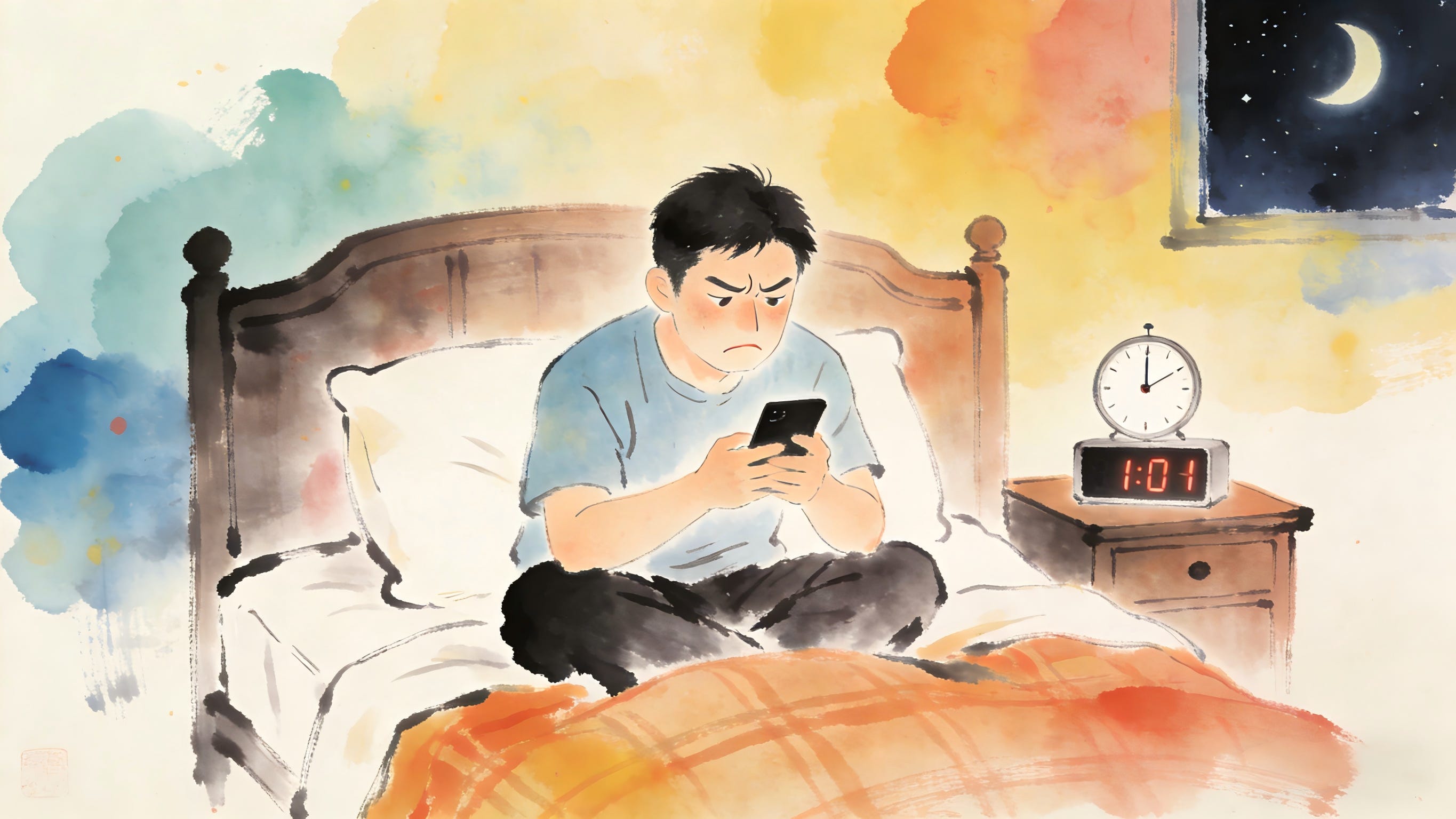
Later that night, instead of sitting with what I felt, I distracted myself by scrolling on my phone until well past midnight.
The emotions didn’t resolve themselves. They accumulated. Regret for missing time with my son. Guilt for not responding more patiently. Frustration with myself for knowing better and still reacting poorly.
That night, my sleep was restless. The next day, everything felt heavier. The original moment was small, but the suffering that followed was not.
These two experiences taught me something simple but difficult to accept. We can’t control what triggers us. Emotions and thoughts arise on their own, often without permission.
But we do have some choice in how we relate to them. The problem is that in emotionally charged moments, awareness tends to disappear. We react before we see.
Mindfulness practice, at its core, is training that seeing. It strengthens our ability to notice what is happening in real time—especially when emotions begin to surge. It doesn’t eliminate anger, frustration, or sadness. It allows us to meet them without being immediately driven by them.
There is a line from Zhuangzi that often comes to mind: “Do not use the mind to interfere with the Way, and do not use human effort to assist what is natural.” Applied to emotional life, this isn’t a call for passivity. It’s an invitation to stop fighting what has already arisen.
When we stop trying to fix or suppress emotions, they often lose some of their power.
With sufficient awareness, we can observe how emotions and thoughts reinforce each other. Irritation gives rise to stories. Stories intensify irritation. And soon, we’re no longer responding to reality, but to a narrative we’re unconsciously maintaining.
Mindfulness interrupts this loop by reminding us that we are the observers of these processes, not their prisoners.
Emotions, no matter how intense, are more like weather than identity. A storm can be loud and convincing, but it doesn’t define the sky. Recognizing this doesn’t make emotions disappear, but it changes how seriously we take their demands.
When we catch emotions early, responding skillfully becomes much easier. It’s like extinguishing a small flame before it spreads. A little attention is enough. Without awareness, the same flame can grow into a fire that damages relationships, sleep, and our sense of self.
Mindfulness doesn’t promise a life free from difficulty. What it offers is restraint at the right moment. A way to prevent unnecessary harm. A chance to protect what matters before it’s damaged by a reaction we didn’t fully intend.
We don’t need mindfulness to reach enlightenment or permanent calm. Even if practice gives us nothing more than fewer arguments, fewer sleepless nights, and fewer regrets, that is already valuable.
To remain steady amid emotional waves, to preserve connection when it matters most, and to act with a bit more clarity in the moments that shape our lives—that quiet protection may be the most practical form of happiness there is.