

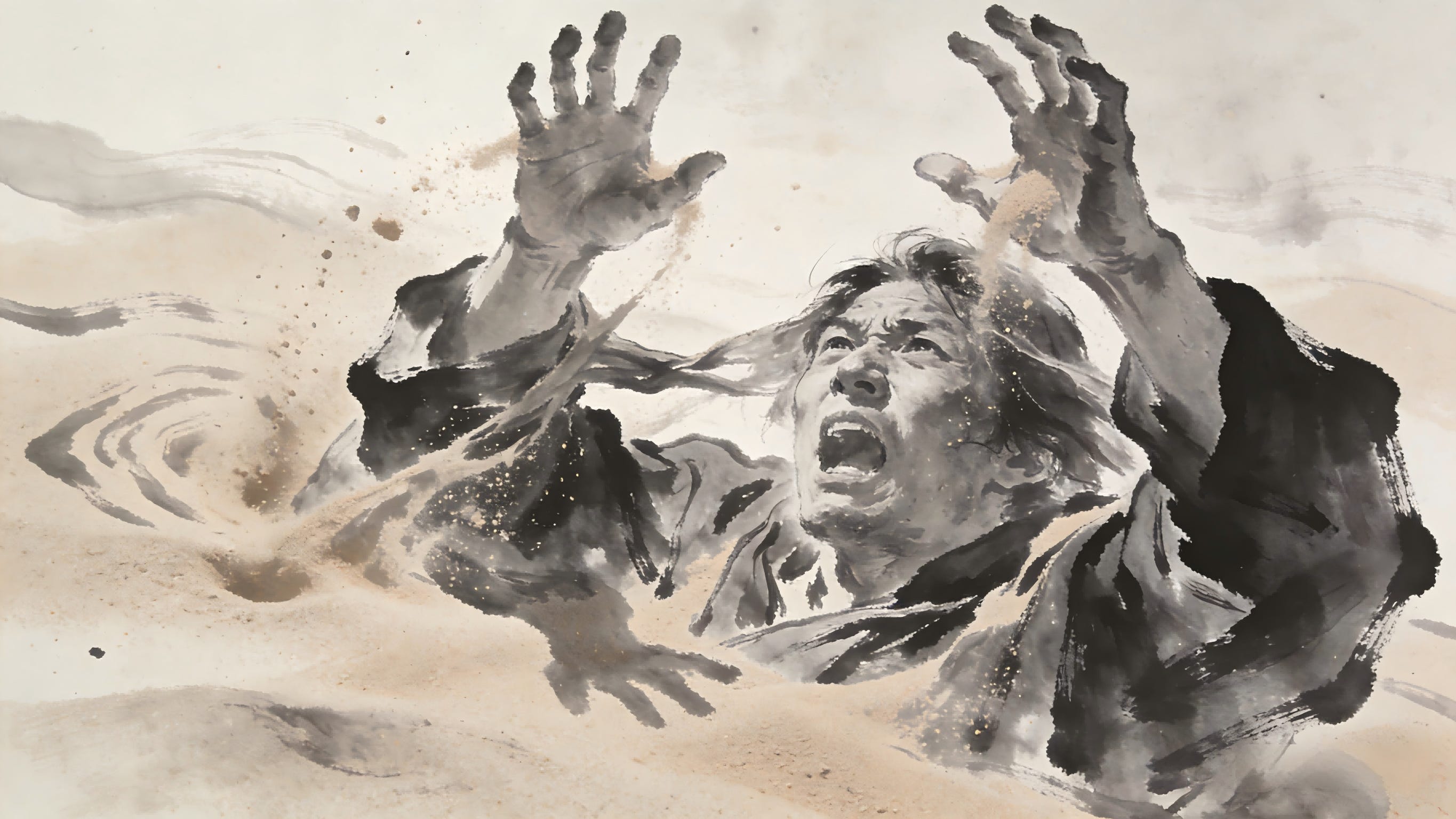
Overwhelm is weird.
On the outside, you might look fine. You might even be “handling it.” But inside, it feels like a storm just rolled in without warning. Your chest tightens, your thoughts speed up, your body goes into alert mode, and suddenly you’re not solving a problem anymore.
You’re just reacting.
And the most frustrating part is that people who aren’t in it don’t get it. They’ll say something like, “Calm down,” as if that sentence is a magic spell. If you could calm down on command, you would have done it already. When you’re overwhelmed, you’re not choosing chaos.
You’re outside your window of tolerance.
That’s the phrase I’ve found most helpful. The “window of tolerance” is basically the range where your nervous system can stay relatively steady. You can think clearly. You can respond instead of react. You can learn, communicate, and make decisions without feeling like you’re in survival mode.
When you’re overwhelmed, you’re outside that window. You may still be moving, doing things, talking to people, trying to “figure it out.” But inside, you’re in fight, flight, or freeze.
And that changes everything.
What Overwhelm Actually Does to Your Mind
When you’re overwhelmed, the brain is not interested in wisdom. It’s interested in protection.
So a few predictable things happen:
Your thinking gets fast, but not clear.
You take action, but it’s often ineffective.
You obsess, but you don’t actually resolve anything.
Or you freeze and avoid the problem entirely.
Or you distract yourself with your phone, videos, snacks, anything that makes you forget for a moment.
Fight, flight, freeze.
All of them are natural. All of them are human. None of them mean you’re failing. They mean your nervous system is doing what it evolved to do when it feels threatened.
The issue is that in modern life, the threat is often internal. It’s pressure. Uncertainty. Too many tasks. Fear of messing up. The feeling that you can’t handle what’s coming.
So you end up fighting an email. Flying into Netflix. Freezing in procrastination. All while telling yourself, “Why can’t I just get it together?”
A Story About Losing My Glasses
I still remember one morning when overwhelm grabbed me hard.
At that time, my mornings mattered a lot to me. I had a routine. I would meditate. I would write. That writing felt important, like it was the one thing keeping me connected to myself.
Then I woke up and couldn’t find my glasses.
It sounds small, but in that moment, it wasn’t small. I searched everywhere. The longer I searched, the more frantic I became. Anger at myself. Frustration. A tightness in my chest. A kind of internal panic.
I was outside my window of tolerance.
And here’s the key detail. The more overwhelmed I became, the worse I searched. I wasn’t actually seeing clearly. My hands were moving. My mind was racing. But my actions weren’t effective.
Then I noticed something that changed everything. I don’t even need my glasses to meditate. I can close my eyes anyway. So instead of continuing the frantic search, I sat down and did my meditation.
About thirty minutes later, my energy had settled. I didn’t feel like I was in danger anymore. I wasn’t freaking out.
And then, almost casually, I opened a drawer I had already checked and found the glasses. They were there the whole time. The first time I searched, I just didn’t look deeply enough.
That morning taught me something I’ve never forgotten.
When you’re overwhelmed, your mind blocks the solution.
Not because you’re dumb. Because you’re flooded.
The first job is not solving the problem.
The first job is coming back into your window of tolerance.
The Two Traps: Fight and Flight
Most people have two default strategies when overwhelm hits.
1) Fight
They try to think their way out. Fast. Urgently. Aggressively.
They brainstorm, overanalyze, talk a lot, search for answers, jump from idea to idea. It feels like they’re being proactive, but the nervous system underneath is screaming, “Make this go away right now.”
That urgency is the trap.
Because urgent thinking is usually not clear thinking.
2) Flight
They try to escape it.
They scroll. They binge videos. They distract themselves. They procrastinate. They tell themselves, “I’ll deal with it later,” but “later” rarely arrives with clarity. The overwhelm is still there, just pushed into the background.
Both fight and flight have the same hidden goal.
They want the overwhelm to disappear immediately so you don’t have to feel it.
But that’s also why neither works for long.
Because the moment you demand that your present experience shouldn’t be happening, you’re resisting reality. And resistance adds fuel to the storm.
It’s like quicksand. The more you struggle, the deeper you sink.
The Counterintuitive Move: Go Into the Storm
Here’s the strategy that actually works, even though it feels backwards.
Instead of trying to make overwhelm go away, you acknowledge it fully. You turn toward it. You enter the storm rather than running from it.
It’s like going to the eye of the hurricane. The center is calmer than the edges.
This doesn’t mean you love being overwhelmed. It means you stop fighting the fact that you’re overwhelmed. You stop arguing with your nervous system. You let the storm be there without adding shame, panic, or self-attack on top of it.
Presence is power.
Not dramatic power. Practical power.
Because when you acknowledge what’s happening, you stop leaking energy into resistance. And when you stop leaking energy, you start to settle.
A Simple Practice: Break Overwhelm Into Parts & Observe the Parts with Equanimity
Overwhelm feels huge because everything is tangled together.
So one of the fastest ways to reduce it is to deconstruct it.
Usually there are three components:
1) Mental talk
The inner voice. The story. The commentary.
“What am I going to do?”
“This is going to ruin everything.”
“I can’t handle this.”
2) Mental images
The mental movie playing in your head. You see the worst case scenario. You picture failure. You picture embarrassment. You picture being stuck.
3) Body sensation
The emotional energy in the body. Tight chest. Dry mouth. Tension in the throat. A sinking feeling in the stomach.
When you separate these, the “blob” loses power. The storm becomes workable. You’re no longer drowning in a single overwhelming experience. You’re observing a few specific phenomena with patience.
You stay with those phenomena, allowing them to be there, changing or static, not trying to make some go away (pushing) or make some stay (pulling). This is called observation with equanimity.
And observation with equanimity alone brings you closer to the window of tolerance.
Why?
Because there is no resistance in this style of observation. You may have heard that what you resist persists. Then it’s only logical to conclude that what you don’t resist dissipates. Without resistance, the energy beneath the overwhelm gradually goes away.
When the overwhelming energy is gone, you naturally return to your window of tolerance, the calm state.
“Anchor Away” Without Escaping
If overwhelm is still intense, here’s another move that works well.
Put most of your attention on something neutral for a moment. Not to escape, but to create space.
Look out the window and watch the trees move. Listen to street sounds. Feel your feet on the ground. Notice the air on your skin.
The key difference is this. You’re not trying to erase the overwhelm. You’re letting it be in the background while you stabilize.
This is not scrolling your phone. Scrolling is avoidance. Anchoring is regulation.
Once you have a little steadiness, you can turn back toward the inner storm with more capacity.
A “Spoken Label” Trick That’s Surprisingly Effective
One practice I love is simple verbal labeling. Quietly, out loud if you can, or softly in your mind.
When you notice what’s happening, label it with one word:
Thinking (if you detect mental talk)
Imagining (if you detect mental pictures or movies)
Local ( if emotional sensations are in one spot)
Global (if your whole body feels flooded with emotional sensations )
Confusion (Acknowledge the “don’t know” mind; this helps to bring equanimity to the confused state of mind.)
This works because it brings clarity and objectivity. It creates distance. It interrupts the trance of overwhelm.
When you hear yourself label the experience neutrally, you stop being swallowed by it. You’re back in the role of witness. And the witness is always calmer than the storm.
The Real Definition of “Success” With Overwhelm
One final reframe.
Success does not mean overwhelm disappears instantly.
Success means you stop making it worse and proactively improve it with strategy.
Success means you don’t fight it desperately or run from it unconsciously. You slow down first. You return to your window of tolerance. You regain a little clarity, and then you choose your next step.
Sometimes the next step is a solution.
Sometimes it’s asking for help.
Sometimes it’s realizing the problem isn’t as urgent as it feels.
Sometimes it’s simply letting time pass and surrender the result to a higher power.
But almost always, the good step comes after you settle.
Overwhelm is not failure. It’s nature.
It’s an invitation to train.
To build capacity.
To learn how to meet the storm without becoming the storm.
And the moment you can do that, even a little, you’re already winning.
I’d Love to Hear From You
When overwhelm or negativity arises in your daily life, what is your default pattern?
Do you suppress it?
Distract yourself?
Overthink and try to fix everything immediately?
Or do you tend to freeze?
And how does the idea of “calm first, clarity later” land for you?
Does it resonate with your experience, or does your mind still want to solve everything immediately?
Feel free to share in the comments. I read every response, and your reflections often help others who are navigating the same inner storms.
We’re all learning this together.
Boom💥I needed to read this. Thank you, dear Muse 💋