

Worry can get intense fast.
Sometimes all it takes is one event. Sometimes it’s just a memory. Sometimes it’s an imagined future. But once the mind gets triggered, it starts spinning.
The thoughts race. The heart beats faster. The body tightens. And before long, you’re not just concerned about something.
You’re inside a worry spiral.
Most of us know what this feels like. Someone tells us, “Come on, don’t worry. The future hasn’t happened yet.” Or our rational mind says the same thing. But somehow that doesn’t help. The worry keeps building anyway.
Why?
Because once the system labels something as danger, logic alone usually can’t switch it off.
I learned this very clearly during the last Chinese New Year trip to Australia.
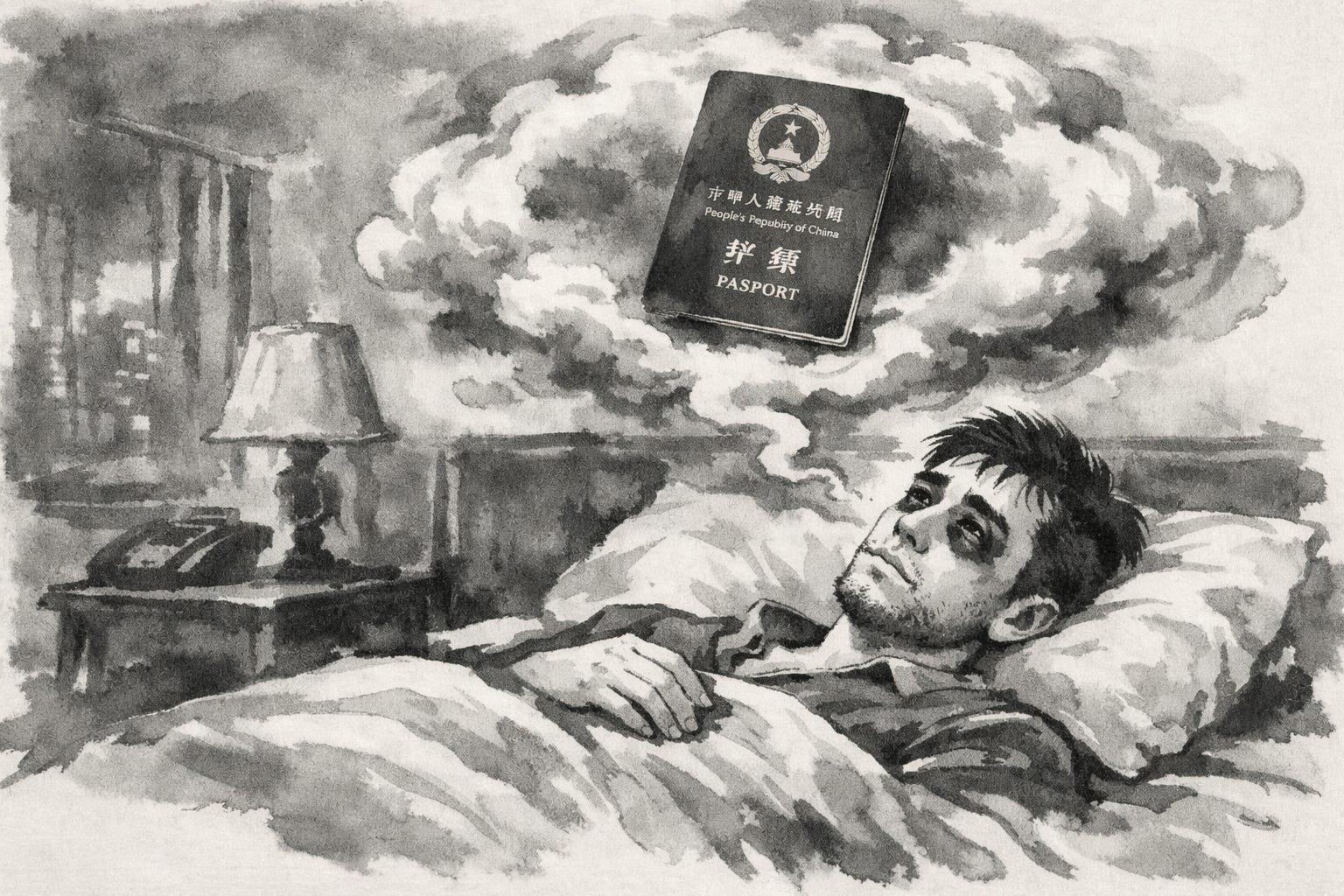
We lost our passports and my wife’s purse in an Uber.
That meant not just losing the passport, but also losing cash, bank cards, and all the practical certainty that comes with having your documents in a foreign country.
It wasn’t total disaster. I still had one bank card with me. We had friends traveling with us, so we could borrow money if needed. We weren’t stranded in the wilderness.
But still, the mind went there.
What if we couldn’t recover it? What if we had to go to the consulate? What if we missed our flight to the next city? What if the whole trip got ruined?
Uber in Australia also moved painfully slowly. In China, the apps are fast and direct. In this case we had to go through Uber, then wait for them to contact the driver, and everything seemed to take forever. So the uncertainty dragged on.
Outwardly, I was trying to stay steady. My wife was already upset, and I felt I needed to be the calm one.
But inside, I was worried.
That night I could barely sleep. I was half asleep, half awake, stuck in that agitated state where the mind keeps looping through scenarios.
Looking back, it wasn’t that the situation was truly catastrophic. It was more like this: there were ninety-nine things still okay, and one bad apple. But my attention was glued to the one bad apple.
That is what worry does.
It compresses your whole reality around the threat.
By around 6:30 in the morning, I realized something simple. Worrying was not helping solve the problem. It was only ruining the present moment and making me less able to handle what came next. So I sat up and meditated for about half an hour.
After that, the worry cooled off. I fell back asleep and got a few solid hours of rest.
And the good news is, we eventually got the purse and passport back. It just took Uber far longer than I expected.
In hindsight, there was no need for that level of worry.
But of course hindsight is easy.
The real question is this: why does worry spiral like that in the first place? And what do we actually do when it happens?
Why the mind spirals
At the most basic level, our system is built to prioritize danger.
That makes sense if you’re walking through a forest and there may be a bear nearby. Your body gets vigilant. Your senses sharpen. Your thoughts start calculating. Your muscles prepare to move. The whole system organizes around survival.
The problem is that this same machinery gets activated not only by physical danger, but also by abstract mental stress.
Losing a passport in a foreign country is not the same as facing a bear. But the mind can still treat it like a major threat. Not just because of the passport itself, but because of everything it represents. Disrupted plans. Lost money. Problems for your child. Uncertainty. Loss of control.
A lot of that doesn’t even show up as clear conscious thought. It sits underneath, as a kind of negative blob. The system senses, “Something bad could happen,” and that is enough.
Once that happens, the inner alarm goes to work.
The mind starts amplifying danger signals and ignoring everything else.
It zooms in on the problem. It replays the worst-case scenario. It generates more fear, more thoughts, more body tension. Then those feelings generate more thoughts, which generate more feelings, and now you have a loop.
That’s the spiral.
And this is why the rational mind saying, “Relax, it’s okay,” often doesn’t work. Because the deeper system doesn’t believe it yet.
The real goal is not to erase worry instantly
This is important.
The goal is not to force yourself to stop worrying on command. Usually that only creates more inner conflict.
The real goal is to help the system come down from red alert.
Maybe not all the way to green right away. But at least from red to yellow. From panic to caution. From flooded to workable.
That alone changes everything.
Some people seem naturally better at this. Something stressful happens, and they stay steady. They don’t deny the problem. They just don’t turn every problem into a five-alarm fire.
That capacity can be trained.
The brain is plastic. The nervous system can learn.
And one of the best ways to train it is through meditation and mindful awareness.
Step one: Let the worry show itself
This sounds counterintuitive, but the first step is not to argue with the worry.
If the mind says, “This is a disaster,” immediately answering back with, “No, it’s not, calm down,” often keeps the fight going.
Instead, let the worried mind speak.
Like a patient therapist listening to a frightened child, you allow the thoughts to show themselves. You let the mental talk come up. You let the images come up. You notice the feelings in the body.
Usually worry has three parts:
First, the mental talk.
“This is bad.”
“What am I going to do?”
“This could ruin everything.”
Second, the mental images.
You imagine the missed flight. The consulate. The money problems. The whole thing going wrong.
Third, the body sensations.
Tightness in the chest. Pressure in the throat. A sinking stomach. Restlessness in the arms.
When these three stay tangled together, worry feels like a giant army. When you separate them, it starts to feel more manageable.
Not pleasant. But manageable.
And that matters.
Step two: Include non-danger signals
This is where the spiral starts to loosen.
When worry takes over, attention becomes narrow. It selects threat and amplifies it. So the antidote is to consciously include other parts of present-moment experience to counter the tunnel vision.
Not to distract yourself but to broaden the field.
Feel the breath. Notice your feet on the ground. Hear the street noise outside. Look at the sky. Notice the sound of a friend’s voice. Feel the chair under your body.
Why does this help?
Because the brain starts receiving a fuller picture.
Yes, there is stress here. But there is also breath. Sound. Space. Ground. Other signals that do not indicate danger.
This tells the system, “It’s not all threat.”
And that begins to cool the energy.
This is very different from scrolling your phone. Phone scrolling is usually escape. What I’m talking about is conscious anchoring while still allowing the worry to be there in the background.
You’re not running from the storm. You’re widening the sky you notice around it.
Step three: Notice the awareness holding it all
This step is more advanced, but it’s powerful.
Once you’ve included both the worry signals and the neutral signals, you may begin to notice something else. All of these experiences are happening in a larger field of awareness.
Thoughts come and go. Body sensations come and go. Sounds come and go. But something remains steady enough to notice all of it.
Awareness itself.
This is the part many spiritual teachers point to when they say, “You are not the clouds. You are the sky.”
I know that can sound abstract, but it becomes practical in moments of worry. The more you notice the awareness holding the experience, the less total the experience feels.
The worry is still there. But now it is one thing appearing in a much larger field.
That shift alone can stabilize the nervous system.
The takeaway
Worry spirals because the mind is trying to protect you.
It is not a personal failure. It is biology doing its thing, sometimes a little too aggressively.
But we don’t have to stay trapped there.
We can train ourselves to come down faster. To stop feeding red alert. To widen attention. To include the full picture. To let the energy cool instead of fighting it.
That’s what meditation helped me do in Australia. It didn’t magically recover the passport. It simply turned off the inner alarm enough for me to rest and function.
And honestly, that was huge.
Because before enlightenment, as they say, life is still life. Things still happen. Passports still get lost. Plans still get interrupted. Kids still need you. The nervous system still gets triggered.
So the point of practice is not just to feel spiritual on a cushion. It’s to handle life better when life gets messy.
That’s where the real reward is and where the real practice is.